

Introduction: Why Reading Spaces Matter
In a world full of distractions, inspiring children to read requires more than just access to books—it requires the right environment. Creating reading-friendly spaces both at home and school can make a significant difference in how children perceive and engage with reading. These spaces act as cozy sanctuaries where curiosity blooms, imagination thrives, and knowledge comes alive. When children associate reading with comfort and positivity, they develop habits that last a lifetime.
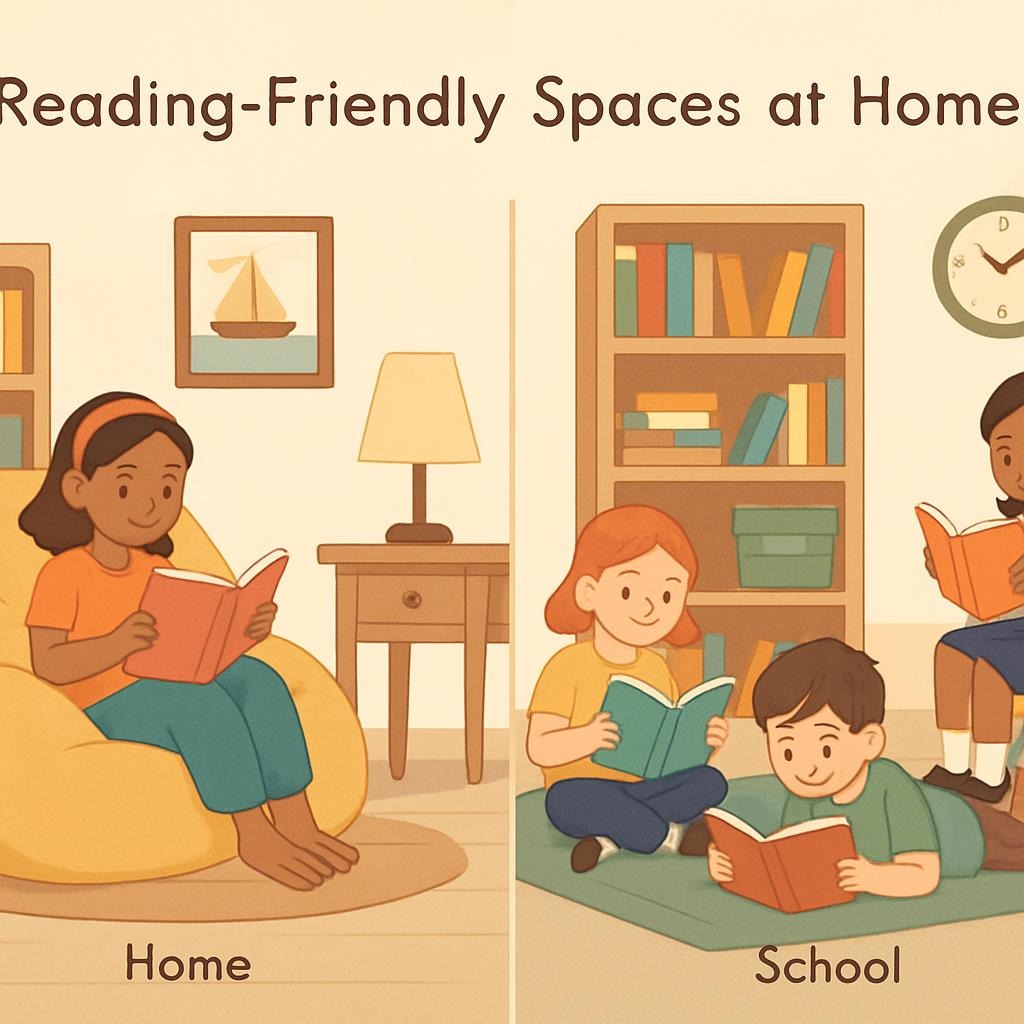
1. The Power of Environment in Shaping Reading Habits
The surroundings in which a child reads greatly influence their interest and focus. A quiet, comfortable, and visually appealing space can transform reading from a task into a joyful activity. Children are naturally drawn to inviting and colorful environments. When books are accessible and attractively displayed, they become part of daily life instead of a chore.
At home, a reading-friendly space encourages family bonding through shared reading time. At school, it promotes independent learning, creativity, and collaboration. Both settings help children see reading as something enjoyable and valuable—not just an academic requirement.
2. Designing Reading Spaces at Home
Creating a reading corner at home doesn’t require much space or expense—just creativity and intention. Choose a well-lit area with comfortable seating like bean bags, cushions, or a small chair. Add a low bookshelf so children can easily reach and choose books on their own. Incorporate warm colors, fairy lights, or posters featuring favorite characters to make it visually appealing.
Rotate books regularly to maintain excitement and curiosity. Parents can also personalize the corner by displaying their child’s drawings or quotes about reading. Most importantly, lead by example—when children see their parents reading in the same space, they’re more likely to follow suit.
3. Creating Reading Spaces in Schools
Schools play a crucial role in fostering reading culture. A well-designed library or classroom reading corner can inspire students to explore books beyond the curriculum. Teachers can decorate these spaces with themes—like “Adventure Corner” or “Science Story Zone”—to make reading interactive. Including a variety of books for different reading levels and interests ensures inclusivity.
Comfortable furniture, good lighting, and minimal noise are essential. Schools can also introduce flexible reading zones—indoors and outdoors—where students can relax and read independently. Collaborative reading sessions, book fairs, and reading competitions further enhance engagement.
4. Technology and Modern Reading Spaces
Incorporating technology wisely can also enhance reading spaces. Digital reading tablets, e-books, and interactive storytelling apps can appeal to tech-savvy children. Schools and parents can blend traditional books with digital tools to keep reading exciting and relevant. However, balance is key—technology should support reading, not replace it.
5. The Lasting Impact
A reading-friendly space does more than just provide comfort—it cultivates focus, empathy, and imagination. Children who grow up surrounded by books develop a lifelong love for learning. They become better communicators, thinkers, and problem-solvers.
Both homes and schools must work together to ensure every child has access to a reading space that inspires them. When children feel that books belong in their everyday world, they begin to believe that knowledge is always within reach. make sure your closing thoughts are impactful and memorable. A strong conclusion not only ties the article together but also inspires readers to engage further.
